
The Ultimate Guide To Standard Patch Sizes
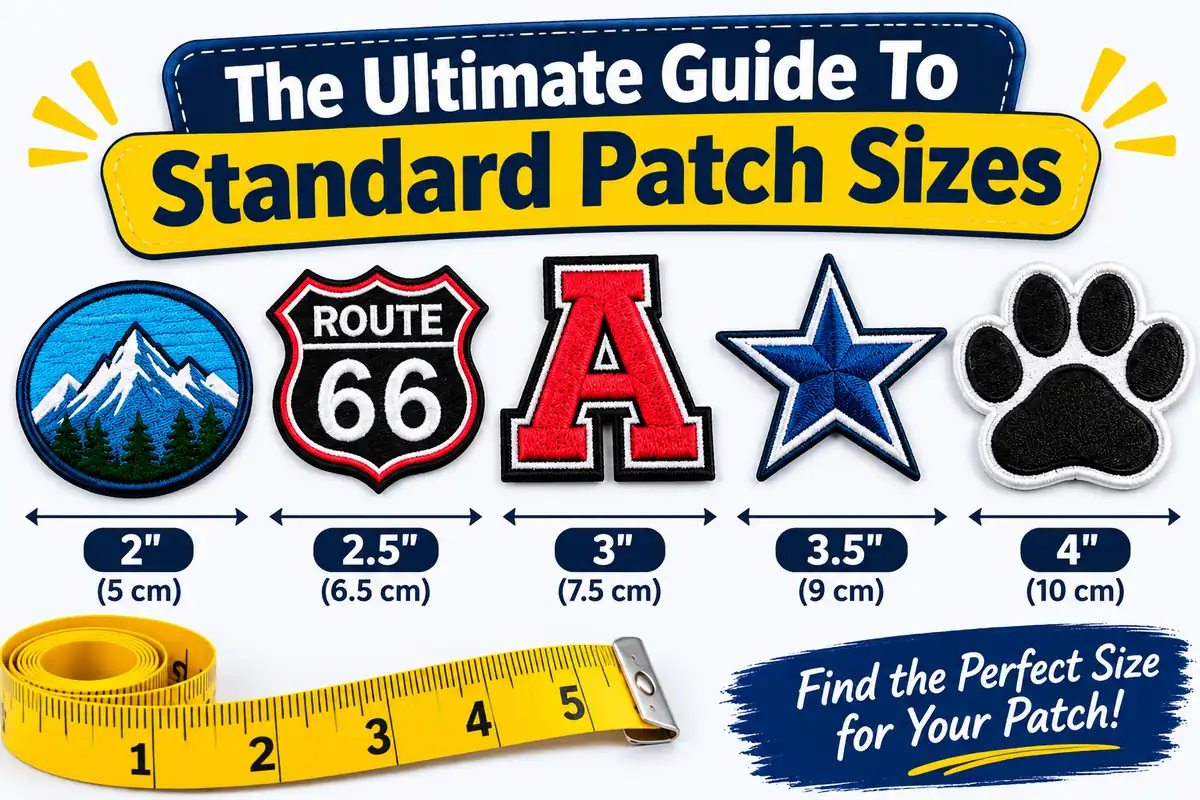
Find out all you need to know about the ideal patch sizes for clothing, uniforms, bags, and accessories. Discover what sizes are available and how to choose the perfect one.
Exploring Standard Patch Sizes For Better Designs
Patchwork can give any normal jacket, uniform, or cap a unique look that will be recognised easily. But no matter how excellent the patch may seem, an inappropriate size may ruin the entire patchwork.
When the patch is very small in size, there may be some elements that will remain unnoticed, whereas an oversized patch can overcrowd the rest of the space. Proper dimensions of the patches should be chosen to guarantee the quality of the patchwork.
A standard military patch size is a good starting point to know about the common sizes, although it is not a strict guide for all patches. Different patches are used for different purposes, and there are a few easy ways to help buyers make their selection confidently.
Understand Common Patch Sizes Before Choosing A Design
Patch size goes beyond just appearance; it determines if the design is readable at first sight. The logo on a cap requires less space than a patch on a jacket; that’s why one size does not fit all purposes.
Standard military patch size is generally measured by its width and height, either in inches or in centimetres. Round logos are measured from one side to another through the widest part, while shields require two measurements.
Small patches are generally 2 to 3 inches in size, medium patches about 3 to 4 inches, while large patches are 6 inches or more. These are just general guidelines and not rules that must be strictly followed.
Get Clear Embroidery Details With The Right Patch Dimensions
There should be sufficient space to sew the thread and create clear lines and legible embroidery. The patch should be viewed at the actual finished size to ensure that it will look sharp when reduced to the actual size.
A hat patch can be effective at about 2–3 inches in width. Chest and polo designs are typically 3-4 inches; sleeve patches can require a shape that adapts to the space.
When ordering embroidery patches UK, the patch should match the garment to achieve uniformity among employees’ clothing. Simple logos stick to the size, while wording or fine artwork may require more space in order to maintain its clarity after stitching.
Choose Military Patch Dimensions That Match Uniform Requirements
Military patches are normally related to shoulder patches, unit patches, and name tags. However, there is no standardised size for patches worn by various military services, countries, or uniforms.
A shoulder patch might measure about 3-4 inches wide, while a name tag would likely be larger and very narrow. Unit patches could come in various shapes too, and thus their dimensions would need to be considered separately.
A standard military patch size chart should always be checked against the rules of the organisation, as the size of an official uniform may be different from that of a general size chart. Military-inspired designs can be more decorative, but should still look tidy and be easy to understand.
Tailor Custom Back Patches For Subtle Statement Style
A back patch must cover the whole panel of the jacket and must not be too close to the patch collar or fold over it. The flat back of the garment is a better measurement than relying on a picture.
The width of many designs is somewhere between 8 and 14 inches, depending on the jacket and art design. A smaller design is suitable for a club name, central image, and border, while a larger design is needed for a simple emblem.
When using lettering and artwork, and the outer edge, allow some breathing room to make custom back patches look balanced. Before placing an order, a paper mock-up positioned on the jacket can be used to determine if the design feels centred.
Pick A Patch Shape That Gives The Artwork Enough Space
The size of a patch is determined by its outline. A 4-inch-wide circle is the same width as a 4-inch-wide shield, but a 4-inch-wide shield might be very tall, so width alone doesn’t tell the whole story.
Each round, oval, square, rectangular, and shield shape is appropriate for a different artwork. A long name might be more suited to a rectangle, but a crest or symbol may be a more natural fit for a circle or shield.
There needs to be plenty of space for fine lettering, narrow gaps, and detailed borders. If the small patch needs to contain too much information, simplifying the artwork helps preserve the readability of the information while maintaining its key message.
Select Motorcycle Patch Sizes That Keep Every Detail Visible
Motorcycle jackets may include club logo graphics, club symbols, and other information, so it is important to plan the space carefully. The patch should be sufficiently large to be easily read from a reasonable distance with no obstructions such as seams, pockets, or other significant patch design elements.
The chest designs normally range between 3-4 inches, while the back designs are 10-14 inches or more in size. This is just an approximation and may depend on the size of the jacket and any club rules.
When the design is clearly understood and placed appropriately, custom motorcycle patches can bond a group of people. The wearer or club should verify the artwork, dimensions, and any rules applicable to its patches before production.
Get Better Results By Measuring The Garment First
Measure the size of the place where the patch is to be applied, not the width of the garment. Seams, pockets, collars, and curved areas can limit space and impact the way that a finished work sits.
The design plays a role, too: long text requires width, long text with a stack requires height, and detailed artwork may require a larger space. If you have a thick border, it may end up blocking the space that the main image requires.
Before confirming standard military patch size, production method, backing, and intended use should be considered. A patch for everyday wear may require a different combination than a patch for display, collection, or for wearing occasionally.
Frequently Asked Questions
What is the most popular embroidered patch size?
The most popular standard military patch size ranges from 2–4 inches, although the exact measurement depends on the intended use of the patch and its location.
What is the standard military patch size?
There is no one-size-fits-all standard military patch size, as it depends on which branch of the military uses it. Shoulder patches typically have dimensions of 3–4 inches, although there is no exact dimension that all countries must follow. It is advisable to check the uniform regulations of the respective organisation before creating the patch.
How large should the jacket back patch be?
The standard size of the jacket back patch ranges from 8–14 inches, although it depends on the size of the jacket and the design of the patch. The back patch should not be placed on top of any seam or near the collar.
Which patch size is appropriate for a hat?
A patch that is about 2-3 inches wide works fine on most caps. However, the exact size should depend on how big the front face of the hat is and how the patch is designed. Simple logos can be small, but complex designs need more space.
How is an embroidery patch size measured?
Most embroidered patch sizes are generally determined using dimensions such as width and height. The width and height of round patches refer to the overall width and height at the widest and tallest points, while irregular-shaped patches must have separate width and height dimensions.
Conclusion
Choosing the proper patch size allows designers to make their design balanced, legible, and professional. Patches, chest patches, sleeves, and jackets all require appropriate measurements for their use.
Although the standard military patch size guide may be a useful tool in choosing the right patch size, it is not meant to replace any actual measurements or military uniform specifications for clothing. The shape of the patch, along with the letters and other elements of design and patch area, also impacts the patch size.
The buyer should measure the clothing, study the artwork at its actual size, and confirm the proof before placing an order. This eliminates all size problems and creates a product that looks fantastic when worn.

Lucas is a creative writer and embroidery specialist who brings years of experience in textile art, embroidery design, and product customization to the Embroidery Patches UK blog. His articles dive into design trends, customization tips, patch application techniques, and the history and culture of embroidered patches. Lucas’s goal is to inspire DIY makers, businesses, and hobbyists with interesting stories and useful advice from the world of embroidery.